Big story in the copyright world is how a lower court judge recently tried to rewrite fair use, claiming that an artist who took pictures from another artist and altered them dramatically was violating copyright. Tons of blogs that touch on copyright have mentioned it, and Techdirt, overanalyzer of all things, is having a field day.
The basic details are that a prominent artist, Richard Prince, was sued for taking images from a book of photos of Rastafarians and altering them, under the guise of copyright infringement. Here’s a side-by-side, see if you can tell the two apart…:
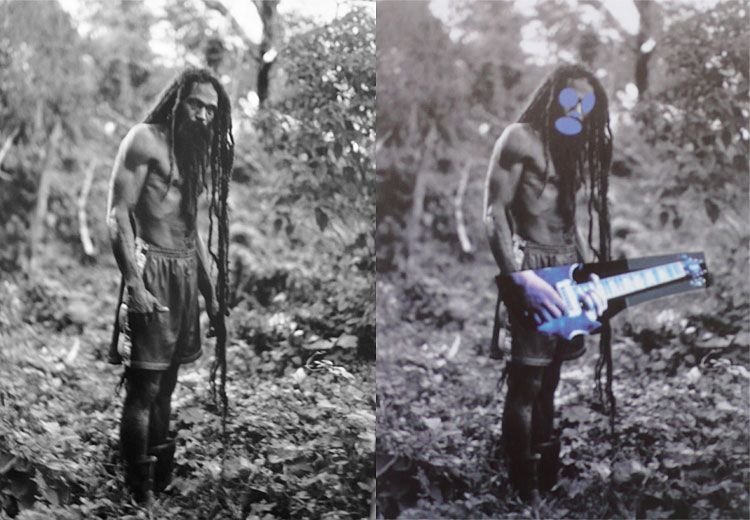
Did you guess which one was Prince and which was the original? I’m guessing you did, and that’s kind of the problem with the original photographer’s argument to me: No consumer would ever confuse these two pictures, and the market for them is different (one of the prongs of Fair Use, and to me, determinative here). If I’m looking for a great photo of a Rastafarian to use in whatever sorts of things people in the market for Rastafarian photos do, I’m going with the left photo! I specifically do not want the photo on the right. If I’m an art connoisseur, I don’t want the picture on the left: I want the tremendous value added by Prince’s attention and critique.
But that argument leads to a pretty obvious problem: What if the guy making the picture on the right is the ONLY person in the market for the sorts of photos on the left? That’s essentially the larger argument that supports telling Prince to F off and pay a licensing fee, and it isn’t from this case, it’s from the AP vs Shepard Fairey, the case dealing with the Obama Hope picture. If you aren’t familiar with that case then I’ve probably lost you, but basically the guy who made the Obama Hope poster/shirt/bumper sticker/lunchbox based his image on a photo taken by an AP photographer, and the AP wants money as a licensing fee for using it. Their argument is: We pay photographers for their photos, and if 1 in a million is useful, we need to get paid for that useful one to make the system work. If the court analyzed business plans, they’d probably give that one a de no-no review (worst pun I’ll ever go for), but some people think the argument holds water.
My opinion is that, copyright at it’s core is intended to encourage the creation of artistic works without fear that they will be stolen and sold without permission, out of fear that such behavior would ruin the basic incentive to create works in the first place. It isn’t about getting into the market for a good you never envisioned creating yourself because somebody else used your work as source material and altered it completely (this is a view courts have typically supported, such as in the famous Roy Orbison/2 Live Crew case). It also isn’t about supporting crappy business models, such as the AP’s claimed structure of paying for thousands of photos on the prayer that one gets famous and they get a windfall licensing fee. The photographers in both the Prince case and the AP case had no intent to create the base for a work of art, and if you told them that none of their photos would ever yield a licensing fee for a famous work of art, they would take the photos anyway. They aren’t, after all, artists in that manner. The AP presumably made money from the photo as it makes it from all photos: they pay a very small fee to the photographer, and use the photo to add value to their story. The Prince Plaintiff made money as well: He’s selling a book of rastafarian photos like he intended when he took the photo.
I’m trying to think of a profession where you are encouraged to just run around, randomly produce things, with no specific monetization plan whatsoever, simply hoping that somebody else “steals” the thing and makes use of it (besides patent trolls… let’s please not make copyright into patent law!). I can’t think of a good reason to promote that sort of market, and I don’t think it’s a proper use of Copyright to defend works that fall into that unique scenario. Luckily, Prince is appealing, and I can’t imagine he will lose.
 danielmarkmiller.net
You must be logged in to post a comment.