Category Archives: Law

Macrosolve does a bad Lodsys impression, patent system needs to change

Lodsys has gotten a lot of attention for their patent threats against app developers lately, and yesterday came news of Macrosolve doing something similar. Florian Mueller wrote some great stuff about it here, as he usually does.

Basically, Macrosolve is a publicly traded app maker who has done terribly at their core business, losing hundreds of thousands of dollars in the last few years. But they were recently awarded a patent for a “system and method for data management” relating to mobile computers, and now they are going crazy suing small developers.

Unlike Lodsys, Macrosolve isn’t beginning by asking for licenses, and the developers they are targeting run the gamut of mobile operating systems. This is probably a bad idea for multiple reasons: For one, some of the defendants are just going to fight the suit, costing Macrosolve a lot more money than Lodsys, who won’t have to defend their patent. Also, by suing developers on a range of platforms, Macrosolve is more likely to entice Apple, Google, and Blackberry to split the legal costs and fight the patent head on. Apple doesn’t have that option with Lodsys, because Lodsys hasn’t actually sued anybody, and they’ve only asked for licenses from Apple developers.

Still isn’t good for the mobile app ecosystem though, and all of this is demonstrating that the patent system really needs to adjust in some fashion to fix software patents, or risk stifling development in “mobile computers”, a rather broad category that covers every new consumer technology likely to come out in the next ten years. It just doesn’t make sense to reward a company likely Macrosolve, a total loser when it came to making real apps, with the right to IP ownership over such a simple concept. Even if the concept wasn’t simple when Macrosolve “invented” it, clearly others reinvented it quite quickly – nobody was copying Macrosolve, whose most successful app was related to barbeque recipes… and it wasn’t even successful. The patent system allows this logic to prevail when a court looks at whether a patent was “obvious”, but that’s pretty late in the game in terms of litigation, and everybody has spent a pile of money by then. Software patents are a pretty broken system, and hopefully the system will adjust sooner rather than later, before the small app developers are forced out of the market.
Leave a comment

Filed under Law, Patent

Should Apple be deemed a third party infringer of Lodsys patents?

Update: The premise of this post was later revealed to be erroneous – Apple probably has a license for the patent in question from Intellectual Ventures, before the patent went to Lodsys…


Last Friday, Lodsys, a patent trolling firm, sued a bunch of small iOS developers for infringing a patent they bought a few years back that they claim covers in-app system features. Lodsys is upset that they are being called a patent troll for suing a bunch of iOS developers for patents reaching back as far as 1992, so they made a blog defending their actions via a Q & A format which treats their readers like children. They also call out individual websites in some of their questions, showing how professional they are.

In short, their defenses are an outrageous joke. Lodsys throws around a bunch of boilerplate defenses to the concepts of patents generally, but don’t address any of the actual criticisms that have been tossed at them. Lodsys, in almost every argument, compares patent law and Lodsys’s actions to classical property issues. Here’s one example, used to “explain” why Lodsys is going after the small developers rather than Apple:

As a comparative example, it is the owner of the hotel who is responsible for the overall service (value proposition) that guests pay for, not the owner of the land that the hotel may be leasing.

The difference between a hotel and an intellectual concept is painfully obvious, but apparently not to Lodsys. Developers have no idea that they are infringing an idea that somebody had back in 1992, because intellectual property isn’t a physical thing. Obvious ideas aren’t something that people assume they can’t use. Hotel owners, on the other hand, know that they are leasing land… they placed their hotel on the land.

Another ridiculous statement comes here:

Historically, the tech industry did not clear patent rights in advance because the amount of time and effort to do so made no economic sense given the relative low cost to create software and the speed at which products were being released… so a norm has arisen where it’s build and ship now, and worry about clearing the patent rights later

If this is accurate, it doesn’t seem like the patents are doing anything to spur innovation in the field at all. If developers are ignoring patents because the cost of finding them are too high (aka all the patent holder did was file a patent, one of tens of thousands issued every year), then why reward the patent holder for disclosing his invention to nobody?

If you want to read a strong critique of Lodsys’s actual arguments regarding patent law, head here. Solid discussion there about how this sort of agressive patent trolling stands to ruin the app market by significantly raising the barrier to entry, but I won’t repeat the entire post here.

What’s more interesting to me is (and it relates to the hotel point), why isn’t Lodsys suing Apple as a third party infringer?

Third party infringement in patent is a very strange, infrequently utilized doctrine, but the key phrases from the Patent Act are “knowledge” and “inducement”. Lodsys claims that Apple has licensed their patents: seems like strong evidence of ‘knowledge’ to me – clearly Apple “knew” of the patent in the strictest sense of the word if they were paying to use it. “Inducement” is typically the wiggle room for defendants, who can often claim they didn’t know that what they were encouraging would be deemed infringement. But how could Apple possibly claim that they didn’t know encouraging use of their in-app system would induce infringement, when they themselves paid to license the patent? Unless the in-app system infrastructure came with a strong warning that using the system opened developers up to lawsuits unless they licensed, Apple seems like they are in trouble.

Maybe the real purpose of these suits is to extort licenses from the small guys as further evidence against Apple of third party infringement, giving Lodsys a stronger bargaining position if Apple winds up paying Lodsys for the patent outright. All this for a patent covering a technology that, in all likelihood, Apple independently reinvented themselves. I’m all in favor of patents on technologies that the inventor actually uses, or that the inventor at least DISCLOSES in some meaningful way to the public. But that is clearly not what’s been happening here.

Since Lodsys seems to be reading blogs that reference them, here is my suggestion: If you take an EXTREMELY unpopular position, don’t spur further debate on the subject by responding with blog posts. If the system is broken in your favor, abuse it quietly, if you must abuse it.

Leave a comment

Filed under Law, Patent

Patent trolling impacting more small developers

I wrote last week about how like.com effectively killed a competitor by suing them over a rather broad patent, scaring off their investors. While calling like.com a “patent troll” is probably a stretch of the already overused term, news yesterday of a company called Lodsys suing small iOS developers definitely justifies use of the term. Lodsys apparently has a patent that they say reads on in-app purchasing, with at least one of the patents continuing on work from as early as 1992.

There are at least three explanations for what Lodsys is doing: First, they might just want money in licensing fees from these small developers. This seems odd (why go after such small fish?), but going after smaller developers eliminates any chance that the patents will actually be litigated, so it is essentially free money. If they think the patent is weak, it’s definitely best to start off with some free money here, plus it strengthens the patent.

Lodsys also might be doing this just to get the licenses, so they can build up a portfolio of licensing contracts as ammunition for when they DO actually have to defend their patent in a lawsuit against a larger developer. Considering the licensing price is going to have to be pretty low, Lodsys probably isn’t doing it JUST for the money, so this theory is more likely than theory number one. Again, if they think the patent is weak, this approach helps strengthen it.

Perhaps most likely, Lodsys might be doing this to scare other developers and force Apple to license the patent for a much larger fee, or buy the patent outright for an even larger fee than that. Apple can’t have developers scared of in-app purchasing, and if Lodsys starts filing suits against every small developer, it will chill the marketplace pretty harshly [insert obligatory “this isn’t what patent law was meant for” comment here].

Obviously these motivations aren’t mutually exclusive, and Lodsys is definitely making an interesting move from a patent perspective by going after small developers when Apple is the obvious big fish. On the other hand, it’s just another example of how patents stifle innovation in consumer web/mobile technology. Probably won’t be long before a few Android developers receive their notices in the mail….

Leave a comment

Filed under Patent, Social Games

Microsoft bought Skype for 8.5 billion, didn’t use a bank as a middleman

No new news that Microsoft bought Skype for $8.5 billion on Tuesday. Reactions were generally negative, mostly because the deal doesn’t make any sense at all.

First of all, Skype is losing money even after all their success. They lost $7 million on $860 million revenue last year even after a 40% user base expansion, making investors skeptical that Microsoft can make this deal worthwhile. Even if Skype grows another 40% next year thanks to being incorporated with Xbox Live and Microsoft Office, and begins to turn a modest profit (it would be impressive if they could get to a $15 million profit), it would still take Microsoft the better part of a century to get their money back.

Second, justifications for the deal didn’t make sense. Some analysts noted that Microsoft was holding at least $50 billion in cash overseas, and this purchase was a way to avoid moving it through the U.S. I imagine most investors would prefer that the company had just paid dividends and a tax, however, rather than buy a company losing money. Another article pointed out that the price per user acquired was much lower than the price Microsoft paid per user to invest in Facebook. That makes no sense either: Facebook is profitable, and Microsoft didn’t “acquire” any users in the Microsoft investment. Totally different transactions. Unless Microsoft can turn Skype into a profitable enterprise, which there is reason to be skeptical of, any price per user was potentially too high.

Third, apparently Microsoft didn’t use an investment bank in the deal. Anybody who thinks they paid too much would roll their eyes: of course they didn’t, or they wouldn’t have overpaid! The article notes that both the I-banks that Microsoft normally uses AND Skype’s I-banks lost out, because Skype was about to go IPO and pay them a big fee. More reports suggest that Skype initially asked for $7 billion… So, how did Microsoft end up paying MORE than the price the other side started off asking for?

Leave a comment

Filed under Funding, Law

Google Music beta is released, Apple the big winner, Grooveshark turns mega loser

Google Music Beta launched today, invite only of course. Initial reviews? I’ve only found one, and it’s Venturebeat who describes it as miserable.

The timing is certainly odd. Google’s original vision was to license with the music labels, and potentially provide access to a giant database of music for a monthly fee, a move which would have dramatically altered the landscape of music consumption in America. Apparently Google misunderstood a basic fact of life: the music industry is completely stubborn, and still thinks this whole internet phase is going to pass. Many labels refused to budge from their “no thank you we will watch our business collapse in peace” position, so Google decided to Beta the product now.

Here’s three little notes on why this was dumb:

1. Google just kicked an essentially identical service off the Android market. But Google Music Beta is legal…

Grooveshark was a streaming service that did exactly what Google Music Beta lets you do. It actually did less! But, Google took Grooveshark down from the Android market, presumably for being shady regarding copyright law. Then Google released Google Music Beta, which does the same thing, but Google insists now that it’s legal! Well, then what was wrong with Grooveshark? Google’s product is MUCH more questionable from a copyright standpoint. On Google Music Beta, you can cache music you’ve uploaded and streamed, which is a much more contentious copyright issue because the device is physically making a new copy. So, totally anti-competitive behavior and extreme hypocrisy. I never intended my blog to hate on Google every other post, but damn, this makes Google look terrible in my opinion. 1994 Microsoft-level anti-trust.

2. Google just lost all their leverage with the labels.

Now, I know Google launched this thing today. It’s a BIT early to write it off entirely. But, on the other hand, Google has blown numerous product launches over the last couple years, and all of them were panned in their Beta stages (Remember Google Wave? How about the Chrome notebook?). Even if Google Music Beta is the BEST cloud storage option in the game, it’s competing with Amazon for the exact same space, a space that consumers haven’t been quick to jump into anyway. Dropbox has been capable of the same cloud storage since the service went live, and Rhapsody has actually been in the space for over a year and only has 750,000 subscribers. Rhapsody is “on the cusp of breaking a profit”, which means it probably never will with the entry of 2 tech giants into the space. So the only successful entrant in the space thus far hasn’t made a profit, and Google will split the remaining market with Amazon, who has a similar service. This will not pressure the labels to jump into the cloud game any quicker. [May 11 edit: Apparently I’m right that the music labels want to go with Apple, anyway.]

3. Apple can do whatever the hell they want now.

Google basically took the “well we can always go to google” negotiation point away from the music labels. Apple can do whatever the hell they want now – if they want to keep working on the labels to license, no problem, they are the only cloud service at the table now, and they are the company that the music industry has begrudgingly accepted thanks to iTunes sales. They can basically hold out forever now: with Google and Amazon competing with the same service, Apple knows they can wait to release something amazing. If it isn’t until next year, that’s fine, because if they can license it will be a far superior service. If Apple wants to hurry and squash that first-mover advantage, they can release their cloud service in a week or two (probably going to be identical to Google’s anyway, if they don’t make a licensing deal). Or, they can wait and see how Google’s product does, and simply make the additions critics want without going through the potentially brand damaging process of having a public beta panned by the media.

I’m gonna stop writing about Google because I do like some things they do (trying to buy up software patents to end trolling, providing the best email service on the internet for free, providing the competitor to iOS). But yeah, didn’t like this very much.

Leave a comment

Filed under Copyright, Law, Misc

My favorite stories that happened while I was taking finals

So I’ve been on a bit of a hiatus, a necessary absence so I could focus on law school finals. But the rest of the word kept going, and there were plenty of interesting stories

Like.com killed a competitor by suing them for patent infringement to spoil funding round:

Pretty interesting story about how Like.com saw a small startup they deemed a threat, so they sued them on a software patent at the end of their funding round. It scared off a large enough portion of the investors that the startup had to fold. The patent itself is maybe valid, or at least, it isn’t blatantly ridiculous, but the founders of the blown-up company found plenty of prior art to suggest that it shouldn’t have issued. But patent litigation is just so expensive and so time consuming, it is a huge disadvantage to be a small company sued over a patent. The inefficiency of the patent system is really on display here, but maybe if stories like this got more attention (where patent law is really killing innovation) then there would be more support for reform.

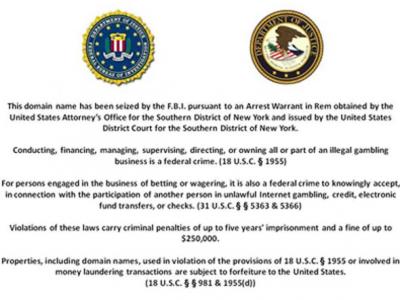
Homeland Security tries to squelch a Firefox add-on that let you access the poker sites they just took down, and Firefox declines to help:

A Firefox add-on called Mafiaafire basically ruins all of ICE/Homeland Security’s domain seizure plans by re-directing browsers around the domain names, straight to the IP addresses. Homeland Security obviously didn’t like this add-on, so they asked Mozilla to take it down. Rather than comply, Mozilla asked if it was legally obligated, and whether the add-on has any legal issues itself. The add-on has since become available for Chrome, so it wil be interesting to see if Homeland Security asks the same of Google before they bother to respond to Mozilla. Speaking of Google…

Google launched +1 and so far it is approximately 10% of a feature:

It’s hard to launch a social network, because they gain all of their power from having your friends on them, and your friends probably weren’t on something that launched yesterday. But what would you do if you did launch one? You wouldn’t want to overwhelm your potential audience for fear of scaring them away, but you don’t want to underwhelm either and make that potential audience wonder what they really get from joining. Google’s +1 is solidly in that second category for the time being. You can say +1 (“like”, essentially) to search results, and I guess see when others indicate the same, but I’m not sure what the point is. I could see the feature dramatically expanded and then MAYBE it would be something like a newsfeed on Facebook… but my friends already post articles on Facebook. I dunno, it needs work.

Leave a comment

Filed under Funding, Law, Social Games

Supreme Court destroys consumer class actions in AT&T Mobility v Concepcion

Wednesday may go down in (obscure, legal) history as the Supreme Court today decided a case that will probably make it into 1L contract books for next year.

The case was a class action suit against AT&T by a class alleging it was overcharged, forced to pay sales tax on a phone AT&T claimed was free. AT&T, however, challenged the class action by claiming the contract signed with AT&T by customers contained a clause that required arbitration, and prohibited proceeding through the process as a class. So, basically, if AT&T’s contract was allowed to stand, you couldn’t sue them as a class of consumers. Which would mean that every company would copy the contract structure, and essentially end consumer class actions.

And no surprises here: The Supreme Court, led by Scalia, refused to follow the lower court’s choice to toss the contract clause as unconscionable, and ended consumer class actions for all of us. It was close, 5-4, but just not enough Obama appointees to push the major public policy implications this ruling would have.

The real problem here is with contracts of adhesion/click-wrap/all the other forms of contract one party spends money to make and the other party reviews in less than 2 seconds. We can’t cut back on those sorts of contracts too far: they do, indeed, allow our favorite companies to release themselves from all sorts of liability while getting us cool products, and you can’t ask AT&T to negotiate an individual contract with every subscriber. But courts need to look at contract clauses COMPLETELY differently if they are in a contract where one party spent zero seconds reading it and the other spend millions preparing it. It has to matter that one party is inoculating itself from all sorts of lawsuits, and the other party really doesn’t have any choice but to accept (can’t exactly find a phone company that DOES negotiate an individual contract with you, and if you dont have an iphone, you dont have an iphone). And it just HAS to matter that nobody who signed AT&T’s contract would have known they just forfeited their chance to sue AT&T.

Leave a comment

Filed under Law

Sony saga continues, 24 billion more reasons not to sue your fanbase?

Sony finally came clean, announcing that the Playstation Network is down because of an outside attack, and that the information of roughly 77 million users may or may not be compromised. They are emailing users whose information may have been put in jeopardy.

See my prior post on the issue for a full discussion of why Sony shouldn’t have put themselves in this position, and why it is closely related to them making the terrible legal decision to sue a user and reach too far into user privacy in the lawsuit. Now, the full costs of this mistake are beginning to take shape.

Venturebeat has an article making some guesses, though I suspect the author is relatively unfamiliar with the economics of the xbox live/PSN markets, because the guesses seem inaccurate. That article claims losses of up to $20 million for lost revenue from the downtime, but it also claims the PSN operates with a 30% profit margin, which it doesn’t (it was hoped to be profitable this year, for the first time ever… though obviously that’s out the window now). But ignoring that, my research estimated $2 million per day in revenue from the PSN, which would come out to something in the $26 million-ish range if it is down for another week.

More interesting was the estimate of what Sony could lose as a result of the user privacy compromise. One estimate apparently threw out the number $318 per user, which would put the loss in the $24 billion range. That seems pretty outrageous, and I feel like even $30 million would be high for that aspect, so who knows. And don’t forget that somebody has already filed a class action lawsuit against Sony for the outage: If they don’t fight it, that’s a pretty large class to settle with, and if they do, they likely spend nearly as much.

So, low end, Sony is losing $50-100 million, and high end, Sony loses more than $24 billion. All because they had to sue the guy who made a workaround for a feature they removed. Perhaps the biggest legal blunder a major video game company has made.

Leave a comment

Filed under Games, Law

Bad legal strategy from Sony leads to a massive headache, Portal 2 is great

The Playstation Network, which hosts 70 million users (and many of their credit card information), conducts virtual transactions, and is the backbone of online interactions and multiplayer for the Playstation 3, has been down for more than 4 days now. It’s being/has been attacked by the hacker group Anonymous, who are taking revenge on behalf of a guy Sony sued for distributing a hack of the Playstation 3. Not only is this drawing a hail storm of bad press for Sony, for suing its users, having no network available, and for being susceptible to hacker attacks, but it is also incredibly bad timing. Two big games just came out last week, both with multiplayer components (Mortal Kombat and Portal 2), and undoubtedly this is hurting sales of those games and of any content available on the Playstation Network.

It’s really too bad that Sony is making such a mess of this: Remember, this all started because Sony pulled support for installing other operating systems, sparking consumers to try and create their own workaround. Who knows why Sony felt they needed to pull this feature, that many consumers believed they would have when they purchased the system. Even if only 5% of users utilized the feature, why upset those (probably very dedicated) users needlessly? Then Sony made a second bad decision – suing the guy who released the workaround, and going too far by obtaining the IP addresses of everybody who visited his site through discovery. Then they ended up fighting a legal battle against a hacker, who was supporting his side through donations from all the random people who, presumably, now hate Sony. Sony is losing a lot of money doing this: They are losing at least $2 million in sales per day PSN is down, and I’m sure even more on fixing the network and legal costs. A disaster.

It’s really too bad, because Portal 2 is the game of the year thus far. It’s simply a masterpiece, and nobody saw it coming after Portal one, which, in retrospect, was a demo/proof of concept that evolved 30 times to get to Portal 2. Valve redefined the first-person shooter with Half-life, and they just did it again in Portal 2. Its like no other game I’ve played, even Portal 1:  it has better writing than most comedies, set pieces that are literally like riding a roller coaster, and characters that you’ll spend time loitering after a puzzle just to hear interact with one another. It’s the best first person shooter I think I’ve ever played, and you don’t fire a single bullet in the experience. But, with the PSN down, I imagine most of the country is buying it for Xbox or laptop if they can.

[Edit: Some sites are reporting on speculation that Sony is using Anonymous as a scapegoat to begin charging monthly fees for access to PSN, like Microsoft does with Xbox Live. Interesting conspiracy theory, but it isn’t true, because Qriocity, Sony’s content distribution system for movies and music, is also down.]

Leave a comment

Filed under Copyright, Games

Poker sites going down, boy genius apparently lynchpin, a classic story of democracy

So, quite a while ago, the FBI decided to go after online poker. Or more accurately, online poker profits. The online poker industry has been making obscene amounts of money and not paying taxes on it, and the US government is in the awkward position of wanting a cut of that money, but having accidentally banned online poker in a bill regarding security in at our ports (yeah, it doesn’t make sense). How to try and get that money without repealing the bill and taxing the companies? Sue them for something else!

The FBI took down the three largest online poker websites recently, and indicted their founders with counts like money laundering and fraud. Global online poker traffic dropped by 22% (a surprisingly small drop, actually), and millions of players in the US have money locked up in those sites that they can’t access. It was, all things considered, a pretty rude move by the FBI.

The backstory is much more interesting: Apparently, the poker companies have been lobbying Congress pretty hard for years, funneling more than $1.6 million to lobbying efforts last year. But yeah, when you are making upwards of $5 billion, you can’t buy your way out with only $2 million in lobbying. Even MORE interesting: The FBI probably didn’t have enough evidence to get the poker sites on money laundering (apparently unable to use Congress’s 2005 bill to go after the sites) until they arrested the kid who invented most of the money infrastructure for those online poker sites, and then offered him a plea deal which obviously involved him telling the FBI all the intricacies of the infrastructure, so that they could properly indict the founders. EVEN MORE interesting: The only reason the FBI picked him up in the first place (He is an australian citizen who was picked up in Vegas… idiot), was because he has been arguing with the poker companies over how much of a cut he was getting, and winning a lawsuit they filed against him, so the poker companies tipped off the FBI when he showed up in the US (according to some sources, but it sounds plausible, right?). Hilarious! By the way, Washington D.C. just legalized online poker, so the fortunes of online poker have really changed in less than 2 weeks.

To me, this is a pretty embarrassing representation of our capitalist democracy. We ban something, decide it’s too profitable but would be embarrassed to tax it, so we indict the founders and ask them to pay fines. The whole thing is about money, but its a horribly inefficient way to go about it: Speaking from a strictly economic perspective, we are levying an indirect tax on the industry, but shutting it down in the process, and losing all the revenue that would have been made in the meantime. Obviously there is a moral dimension, but if we were really concerned about gambling as a country, we probably wouldn’t have casinos in 28 states (not including purely “card rooms”), lotteries in 31, and a stock market that probably ought to look MORE like poker. So let’s be honest, we are okay with people playing poker, and they are gonna gamble even without these sites. We couldn’t find a way to just tax them? Isn’t that what we are good at?

Leave a comment

Filed under Law