“Video games can never be art” – Rebuttal number 343

Roger Ebert wrote an article last year with the above title, and just about everybody in the world has chimed in on the topic. It’s actually a topic that’s been beaten quite to death on the internetz in the time that has passed since that initial claim by Ebert, and I’ve read opinions on every end of the spectrum, from “never” (Ebert’s position) to “definitely”.
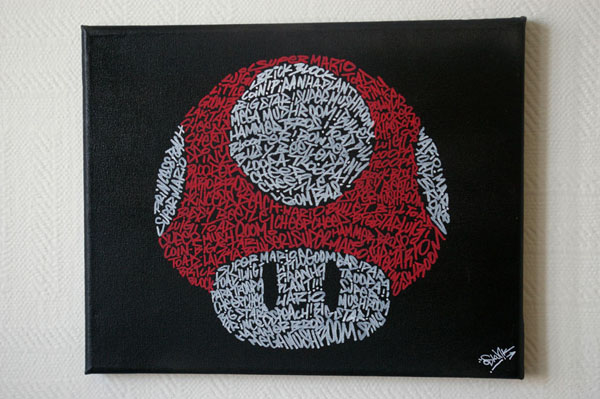
                                                                                            (“art”)

Debate on the topic is so tired to me that I’ve had this post saved as a draft since I started this blog. Being an avid fan of video games and coming from a liberal arts college, entering the fray of an un-winnable debate seemed like a natural move. But a post on video games as art was already feeling a year late, months ago. Why now then? My inspiration will be revealed shortly, after a very brief somewhat long just frickin stick with me okay? aside:

Art is an ideal. Nobody has the example form of “art” locked away somewhere, for us to look at and compare new creations to as a manner of deciding if they are up to snuff. Like any good liberal arts student, I’m well aware of the history of ideals in our society, and could bore plenty of people with musings about the development of ideals in society from Plato to Kant to Nietzsche. Woo hoo. The only thing that matters about ideals is that we never have a mutual, universal understanding of what they describe. Just like good in one culture is different from good in another, art in one culture is different from art in another. In an internet world where the majority of our personal exposure to culture is self-selected from an almost limitless number of sources, agreement on what is contained within a notion like “good” or “art” has fragmented even further – the websites I read tell me one thing, and the websites my roommate reads tell him another. Our inability to come to a consensus on video games as art is as unsurprising as our inability to come to a consensus on any other intangible concept, like justice or religion.

But I venture that art does have one quality which most would agree upon – art needs to be able to push boundaries. There’s an innate concept of progression in the endeavors we generally consider art, as opposed to the things we don’t, like, say, filing taxes. When people ascribe the qualities of art to typically non-art things, they are describing the sense they get when they feel a progression in the practice of that thing – when an accountant claims that there is indeed an art to filing taxes, she is describing the sense of progression that comes from doing an activity in repetition. While video games obviously have a similar learning/mastery feel, that isn’t the type of progression I feel all art shares.

This year’s E3, the perennial festival of game announcements for the coming year, was the inspiration for this post. I’m excited to play a bunch of different games, but here’s the meat of the list: Assassin’s Creed 3, Mass Effect 3, Halo 1 remake (but really, it’s the 6th Halo game – 1, 2, 3, ODST, Reach… and 1 again), Uncharted 3, Call of Duty number 70, Diablo 3… and Journey. You don’t have to know anything about video games to realize that only one of those titles has the potential to be a wholly unique experience (and thank god for Journey, or else this article would need a different conclusion). You can argue that the sequels are art in the manner that tax filing can be art, in progression through small improvements achieved through repetition. But Halo and Call of Duty are basically simple first person shooters, of which there have been literally thousands before. They will be quality entertainment, but it’s a stretch to say that they are pushing boundaries in an artistic sense.

Pushing boundaries, and thus art, requires that completely new takes on the medium show up. Van Gogh, Escher, Picasso were all great artists for their newness, as compared to pre-Renaissance greats. Those pre-Renaissance greats, the ones who painted still lifes and landscapes over and over, were artists indeed, but painting as an art form required the Van Goghs and the Eschers to lend the medium promise of originality in a sense that transcends perfection through repetition. Pre-Renaissance artists were definitely the seasoned tax specialists of my double-analogy. (Painting has always intrigued me as an art form historically, because being a living painter was a rather bleak experience in the pre-Renaissance period as compared to the fabulous lives lead by, say, Andy Warhol or Banksy, AFTER human culture agreed that painting was a true art.)

                                                    (Still life by Cezanne, a boundary pusher)

Video games are young, and my point in all this is that the medium hasn’t left the pre-Renaissance phase. I’m more excited about the games coming out of E3 than I have been in years, but Assassin’s Creed 3 is the third rendition of a decent still life. Halo is the 800th rendition of the still life called Doom. Developers are, largely, still painting still life. A large part is tied to expense: The profit motive that funds these games is, to really push this metaphor, like the patronage system that drove pre-Renaissance art. It still costs a LOT of money to make and market a big video game, so 90% of the stuff we hear about is driven by the aims of the companies bankrolling the ventures. Games are increasingly built to fit the agreements that make the developers money, by establishing a brand, and making the majority of the profits on the cheaper-to-develop sequels. This cycle works, and because games are such expensive investments, developers stick to it.

So that’s basically my take on the whole thing… Economics have driven games to the point of being somewhat repetitive and derivative, and while there are certainly unique, original entries that push boundaries (Limbo and Heavy Rain last year, Journey this year), they are few and far between in a sea of first person shooter rehashes, and they don’t make nearly as much money, so developers don’t clamor for them. There’s art out there, but until the cost of distribution, marketing and development come down dramatically, studios will still favor the still life to the Picasso.

2 Comments

Filed under Games, Misc

Zynga sues Vostu for copyright infringement, will Zynga “win”? Zynga probably doesn’t care about the outcome.

Really, really fun news this week as Zynga filed a lawsuit against a copycat. The complaint is nothing short of entertaining ( at least five pages of screenshots), and the techcrunch article even has the accompanying video, which shows side-by-sides of players playing both games. Here’s a couple important things to think about when you chat about this over the watercooler:

Zynga has a reputation as a game stealer, but stealing games isn’t usually illegal. Notice I didn’t say they stole games: barring really extreme situations, you can’t “STEAL” a game and have an actionable right under copyright law. Copyright protects original expression fixed in a tangible medium. That part is easy, but when the copycat reproduces everything themselves, it’s hard to draw the line between inspiration and blatant ripoff. If you straight up rip the art pixel by pixel from a game and reproduce it without permission, then that’s copyright infringement. But short of that, nobody has really explored where the line is for copyright infringement in a video game/facebook game. Game mechanics aren’t usually subject to copyright law, so the fact that coins pop out when you click on a house in both Cityville and Vostu’s clone doesn’t mean a whole lot. And copying the art style of a game is close to accepted practice in the social game world, where Zynga rose to fame on the shoulders of other, extremely similar games by lifting the art styles of those games (Google “farmvillians” for more background if you don’t know). While people complained about Zynga’s art appropriation, and while they were sued by those games, those suits were mostly over trademark infringement, not copyright infringement, and they were settled before legal costs could ramp up. Zynga might have been able to win most of those suits had they wanted to fight them out.

Blatant copying doesn’t really WORK in social games. Copying allegations were a big part of Zynga’s early history, but most people recognize that copying wasn’t what made Zynga’s games popular. Social games spread through virality, through network effects, and through cross-promotions with other games in the developer’s network. Zynga realized this early on, and while they did borrow most of the mechanics from the early games from others, they also added all of the features that grew the game, and they tweaked it to make the user base into a revenue generating monster. Even copying these mechanics, Vostu hasn’t really made much off of it for many of these reasons (you can’t copy a critical mass of users). Has Vostu actually benefitted from this copying? Vostu has half a million users, monthly. Zynga has 264 Million. So I don’t think their copying is really helping that much.

The legal strategy is interesting. Zynga isn’t bringing out the big guns on this one (they are already spending A LOT on their IPO, to be sure). No offense whatsoever to Keats, McFarland and Wilson LLP, the firm handling the complaint, but it’s a six attorney boutique in Beverly Hills. Not exactly a traditional heavyweight in the copyright or startup world by any stretch, and google searches turn up nothing much on the lead attorney on the case, Dennis L. Wilson. A few complaints that he was aggressive in sending out notice letters when he was at Fox… Like I said, I’m sure he is great, but hiring that firm to take the case is, in my estimation, a slight reveal of what Zynga is thinking. I’ll elaborate:

Zynga probably doesn’t care if they win or not. Zynga doesn’t need to win. Zynga is FLUSH with money, and they literally don’t care if this lawsuit goes on forever. They may WANT it to go on forever. If this is a battle of attrition, Zynga just needs to not get brushed aside in a summary judgement, and then hope Vostu can’t afford to pay the bills for a drawn out fight. Maybe draining Vostu’s resources is enough. Maybe the lawsuit scares away future investments into Vostu. Maybe the lawsuit helps assure Zynga’s potential IPO investors that the company’s core business isn’t easily copyable (ahem groupon ahem). All of those outcomes are achieved by assuring that the lawsuit survives just a few months, so it really doesn’t matter if Zynga wins. Vostu isn’t really even a threat to Zynga: Vostu has half a million users across all of their games, compared to Zynga’s 264 MILLION.

It’ll be fun to watch the suit though, because if Vostu fights it, we may get a court to make some strong precedent on where the line is between copying and homage in a genre of entertainment where that line is blurred constantly.

Leave a comment

Filed under Copyright, Law, Social Games

Is Facebook’s Project Spartan/Microsoft’s Kinect SDK a sign that the application market wars have begun?

Mobile devices are the future. Whether it be iPads, smart phones, netbooks, or whatever device we will use to access “the cloud” in five years, and we probably won’t care as much about desktops or even laptops as we do now. That’s old news, but it’s yet to be seen what that news means for the traditional big hitters in the tech world, and how those big hitters will keep up with a rather dramatic market shift. Apple was the first to the market by a year or two, really, and they paved the way for the app market structure: an iphone on 3G showed the world how easily we could do without our desktops, and pointed software towards the grave. Soon the days of software developed by teams of engineers over multi-year development cycles, “mastered” and sent to a manufacturer to mass produce to send to physical stores around the world would be gone… Our mobile devices, of which it seems we can’t get enough right now, run on applications – they aren’t “finished”, but constantly and quickly updated. An excellent piece by Ben Horrowitz on the Economist website pointed out that advances in programming languages greatly reduce the number of hours it takes to create a strong piece of software, and along with a whole host of other reasons (faster wireless, cheaper phones/tablets, end of closed development platforms), applications are how 90% of consumers will get 90% of their content in the future.

This year will go down in history as the year where the big tech companies realized that the future was in application markets, and where every single one of them entered the fray. News came yesterday of “Project Spartan” (lame codename), a Facebook HTML5-based application market, designed to run on any web-capable device (aka the iphone). This joins Amazon’s app market, already running on a bunch of devices, and obviously Google’s Android market and the original “app market” by Apple. As we learned in the original computer boom, only one (or two) of these operating syst… I mean app markets… can survive. Every technological platform reduces to 1-2 main competitors eventually; just look at computers [mac/pc], operating systems [windows/OS], smartphones [iphone/android… sorry blackberry!], video game consoles [xbox/playstation]… It’ll happen in app markets too. Does Facebook’s inherent social advantage mean it can take on Apple and Google with their giant headstarts and hardware presence? Can Amazon do anything to parlay their advantage in moving physical goods and their relationships with distributors into something app users care about? Can Barnes and Noble turn a pretty solid device (the nook) into something that won’t be a historical relic in 2 years? Is Microsoft gonna uncharacteristically sit this round out, or is the Kinect their app market?

begun the app market wars has.

Leave a comment

Filed under Games, Misc, Social Games

Groupon and Pandora getting killed in the media as their IPOs approach, Will Zynga reach $1,000 a share?

LinkedIn’s IPO earlier in the Summer seems to have sparked a major IPO push for a lot of the big web companies that have found success as of late. Groupon filed their initial docs last week, Pandora’s shares hit the market on Wednesday, and Zynga is by all accounts filing their initial documents sometime very soon.

While LinkedIn’s IPO was largely a success (so far), it still raises eyebrows: the initial IPO price of $45 represented a Price-to-Earnings ratio of about 250, and the current trade price has a P/E of 500, much higher than the average for the market, and certainly not the hallmark range of a strong company. With that said, Groupon and Pandora are likely to have even worse states, but unlike LinkedIn, the companies are getting lambasted in the media before their IPOs. Rocky Agrawal has been doing his best to ruin Groupon’s IPO through a series of guest posts on Techcrunch, which are sticking on the top page as featured posts with rather uncouth titles like “Why Groupon is Poised for Collapse“, “Groupon was ‘the single worst decision I ever made’“, and “Why I want Google Offers and the entire daily deals business to die“. You can probably guess the gist of those articles from the titles, and they are good reads despite being titled as if they were trollish posts on a business forum frequented only by 16 year olds.

In slightly more journalistic corners of the world, Fortune ran an article today on Pandora’s business model as a loser in the long run, detailing how they have yet to find a way to generate a profit from any aspect of their service, yet they are raising the price of their IPO anyway.

So really, it’s not looking good for the tech IPOs right now. Groupon’s core business looks completely copy-able, a bad sign, Pandora is going to start getting quashed by iCloud and other cloud music providers, and neither is making money. And this follows LinkedIn’s astronomical valuations, which seem hardly justifiable if you actually think about LinkedIn’s business model. Yet people ate up the LinkedIn IPO, and even with all this bad press, nothing seems likely to stop Groupon and Pandora from becoming overvalued by months end as well.

Zynga, though, has solid financials. They actually MAKE money, but that little detail could backfire in the face of investors’ rabid hunger for tech stocks: If they deputed at a P/E of 250 like LinkedIn and opened with as many shares as LinkedIn (roughly 100M), assuming a net income figure of $400 million (who really knows with a private company, but I’ve seen that number frequently), then Zynga would be the highest priced stock in the history of the stock market at around $1,000 per share. Remember, that’s at the P/E multiple that LinkedIn opened at, BEFORE their stock DOUBLED in price.  That would put our irrational exuberance in a company at a new, embarrassing high, and even staunch anti-bubble supporters would have to admit that something was wrong. Something tells me we will find out before the end of summer.

Leave a comment

Filed under Funding

Microsoft v i4i decision: No surprise, Microsoft loses

Pretty unsurprising news today, as the Supreme Court handed down their decision in the patent case of Microsoft v i4i. I’ve written about the case before, back when the oral arguments were heard, and noted that Microsoft was extremely unlikely to win.

Well, Microsoft actually did worse than I could have imagined, somehow losing Judge Breyer’s vote and falling to i4i in an 8-0 decision (one justice recused himself for owning a significant share of Microsoft, and even HE said he would have voted for i4i). It was really an uphill battle for Microsoft from the get-go: they were trying to lower the bar for the standard applied when a patent is challenged, from a clear and convincing standard to anything lower, but decades of court precedent and complicit silence on the part of Congress made it unlikely that the Court would step in and reverse standing law without good reason. Sotomayor wrote a snarky opinion, basically dismissing Microsoft as having no case, and the clear and convincing evidence standard will live another day (and likely for a very, very long time).

Unfortunate, because the patent system could really use some more editing and the Court had shown a willingness to adopt change by brute force in some recent cases. But alas, the patent system remains broken, to the surprise of nobody.

Leave a comment

Filed under Patent, Uncategorized

The Wii U – More like a Dreamcast than a Wii.

So you’ve just finished the life cycle of one of the best-selling consoles ever. Took a big gamble on a funky controller setup, lowballed the competition in terms of processing power in a quest to reach a broader audience, and the gamble paid off! Crazy, who would have thought. What’s the next move? This is the position Nintendo found themselves in before this week, when we got a first glimpse at their answer. The Wii U was announced this week at E3 – and it’s a total departure from the Wii gameplan. The new gameplan? ZOMG EVERYBODY LOVES TABLETS LETS DO THAT.

The Wii was a shock to the console game both from a gameplay and a market perspective: it was completely outmatched in terms of hardware by the PS3 and Xbox 360, but it appealed to a much wider audience with funky wii-mote controls and quirky party games, at a lower price point. The hardware was so cheap, Nintendo was actually making money on the console itself at the end of the lifecycle, a rare event in an industry where the console is usually the loss leader (my roommate and I often joked that if the Wii broke, we’d just get another one in a box of cereal or a cracker jack box). The Wii outsold both the Microsoft and Sony competition, and inspired them to copy the Wii with the Playstation Move and the Kinect.

Maybe that’s why Nintendo had to pivot away from motion controls: the Kinect now looks like it will own that space, so why fight Microsoft on even footing? But the Wii U offering is still crazy weird, and doesn’t deserve to carry the Wii name (hopefully Wii U is just a prototype name anyway: it sounds like either a bad social game, or a person very confused about who they are speaking about…. “i just bought my we you today…. huh?”)

The Wii U looks like it returns Nintendo to the hardware battle, though without knowing what the next-gen offerings from Sony and Microsoft look like, it’s a little hard to say. But the real “draw” to the Wii U is the controller, which is basically a Motorola Xoom tablet with pieces of a Wii-mote grafted to the sides to make it more like a standard controller. It’s not the WORST idea, and I’m sure games will find some interesting things to do with it. But it feels like Nintendo just wanted a piece of the iPad/tablet craze, and less like the controller will change video gaming forever. Plus, having the controller be interactive isn’t even new, the Dreamcast did it years ago (quite successfully, too). It seems more and more to me like the Wii U is really a Dreamcast 2 in disguise: it’s got the same color scheme, the controller is rather rectangular with an interactive screen in the middle, and it’s bound to be weaker than the truly next-gen systems that will follow it by a few months. So it’s a weird play by Nintendo. Might still be good, and I was a Wii skeptic who was forced to convert after great games like Mario Galaxy and Smash Bros. And I loved my Dreamcast back in the day too. But it just seems strange to follow the Dreamcast playbook when that playbook basically knocked Sega out of the console market entirely.

Leave a comment

Filed under Games

What will the tech sector look like in a year after every major player goes IPO?

For the last year everybody has been talking about “when will Zynga/Facebook/Groupon/etc have an IPO?”. Now, with recent IPO filings from Groupon, a successful IPO from LinkedIn, and musings of an IPO for Zynga, the news has to shift into a new speculative phase. So, how will the landscape of startups and tech companies, and the distribution of talent among them, change over the next year as all of these companies file for and complete their IPOs? (Warning: Everything below is speculative garbage. Actually, that warning probably belongs at the top of every one of my posts, and probably at the top of every blog…)

For one, I imagine a lot of the companies will lose large swaths of their core members to other endeavors. Think about it: If you are a 2-3 year employee of LinkedIn/Groupon/Zynga, you really hit the lottery when it came to stock options, but until the IPO your ability to cash out and actually make the money is severely limited. Maybe you could trade some on the secondary market, but the company strongly discourages that (for good reason), so the IPO may be the first time you can sell shares for astronomical prices. Plus, new startups will pay a premium for somebody who was at one of those successful companies from the beginning (Zynga project managers, for example, are highly sought after by social game startups, and I imagine somebody with institutional knowledge of Groupon or LinkedIn would benefit from a similar advantage). Google and Apple regularly see employees rise up through the ranks and then depart for smaller ventures, so its pretty likely that the new group of tech companies will see employees leave after their IPOs as well.

The real thing we don’t know is how IPOs by this group will impact the rest of the market in terms of venture capital, startup formation, and general investment in tech. It’s far too soon to tell how the larger market appreciated LinkedIn post-IPO, and although the IPO itself raised LinkedIn’s valuation quite a bit, the company now has to produce growth and profits for investors if that valuation is going to hold. Zynga seems a shoe-in to grow (unlike Groupon, they are wildly profitable despite their rampant growth), and with a likely IPO valuation in the $8-10 billion range, that would give Zynga enough cash to unify the social game front and buy up any sizable competitor. That sort of money behind Zynga will likely skyrocket valuations of other game companies – companies become more valuable in Zynga’s network, as the social/viral aspect of their games generates exponentially greater returns when the games benefit from display time on the screens of Zynga’s existing user base.

This post isn’t going anywhere, really, so if you are still hoping for a conclusion I apologize. My predictions are basically that Zynga will take over the world with an overvalued IPO. Because Zynga doesn’t actually need any more money, the IPO is driven by a desire to let founding members and middle management cash out (see Groupon). So shortly after the IPO, Zynga will lose tons of talent to now also overvalued smaller companies, who Zynga will be forced to buy up in the pressure to spend that IPO cash and grow. Maybe we shouldn’t call IPOs successful just because they raise a company’s valuation. There, let’s call that the conclusion.

Leave a comment

Filed under Funding

Supreme Court continues trend of cutting back on patent rights

The Supreme Court has recently been rather proactive in cutting back on areas of patent law that many academics felt were too generous to patent holders. Recently the Court ruled that more ideas should be deemed “obvious” (and thus unpatentable) at various stages of the patenting process in KSR, and that courts should discontinue the practice of rewarding all successful patent infringement plaintiffs with injunctions in Ebay.

This week saw the Court take another shot at the patent establishment, albeit a smaller one than in KSR and Ebay. In Global-Tech Appliances vs. SEB SA (or, as I and probably most of the patent world will refer to it, SEB), the Court ruled that there is a high bar for a company to be deemed a third party infringer under the inducement theory presented in the patent act. Specifically, the inducer has to know about or be “willfully blind” to the existence of the infringed patent. This overruled the lower court’s test, which required a showing of mere “indifference”, and while only the legalese-apt would recognize the difference between “indifference” and “willful blindness”, the burden advocated by the Supreme Court will generate much less litigation. The weaker test would have opened up a lot of technology companies to liability under the inducement theory, specifically where users violated patents that the the tech company wasn’t aware of. I imagine most pundits on the topic will hail this as a smart move in line with the other cuts to patent rights the Court has been making.

Patents are getting out of control, especially in software – seeing the Supreme Court make cuts to patent rights isn’t surprising in light of all the negative press patents have been getting, though obviously it would be nice if either the PTO or Congress took some more substantive action.

{Late Edit: I tend to like Techdirt, but in the pressure to put up posts, Mike M. on occasion will overlook what’s actually going on and just throw in his boilerplate views on an issue. He seems to have done this with his analysis of this Supreme Court case. The 3rd comment to the post sets him straight, so read that if you want to reconcile our two differing conclusions.}

Leave a comment

Filed under Patent

Social Game IPOs heating up, Zynga releases a new game tomorrow

News from the last couple days suggest that Zynga is planning to file for an IPO, following LinkedIn’s successful IPO move earlier in the month, and news from Popcap that they plan to IPO as early as November. So the big headlines all over the internet are that the IPO market is heating up, that social game IPOs are heating up, and that there is or is not another tech bubble (depending on who you ask). Kabam also raised $85 million last week, so a lot of money and hype is heading into the social game market right now.

In other/related news, Zynga is releasing their first game in many months tomorrow, and it DOESN’T end in ‘ville! Empires & Allies will launch tomorrow according to every technology site on the planet, and it’s a pretty big departure from the “mindlessly clicking on things and coming back tomorrow to click again” genre that Zynga has cornered so far. Apparently the game is something of a Risk/Settlers of Catan hybrid, though I’d be surprised to see the deeper strategy elements of either of those games appear in E&A.

Social games are clearly on the rise, and Zynga’s eventual IPO is probably going to surpass LinkedIn’s valuation by a mile and rile further claims of a bubble, but really the social games market isn’t close to finished growing. Here’s why:

The iphone has really only had one blockbuster game (Angry Birds), and it wasn’t even social – Social/mobile is the new hotness in the consumer web world, but it hasn’t hit it’s stride yet. There hasn’t been a big game yet that successfully connected a gaming experience with a social experience for a mobile device. Somebody will eventually figure out how to connect those dynamics and make a compelling user experience, but so far nobody has. And even besides that, Angry Birds showed that there is a large market for a game based on a single-player campaign with none of those social elements, and there are bound to be more hits the size of Angry Birds as developers become more sophisticated.

Nobody has made a good Facebook game yetThat’s right, as somebody who actually likes PLAYING games, I can confidently say that compared to the other things in the world that we consider games (board games, console games, classic games like chess), development for the Facebook platform has been rather pathetic. Compulsion loops are great for making money, and there’s no questioning that plenty of companies have made a living by satisfying people’s demand for mindless entertainment. But in terms of experiences that we could use in an argument about games as art, nothing from the major social game developers has really come close. Does every developer need to be trying for art when they make a social game? Of course not. But at least a few will, and whoever succeeds will probably have a sizable hit on their hands and gain a cult following for it.

Tablets (iPads) will probably be the next big development platform, and demand for tablets is not yet satisfied – Tablets, with their huge screen and more powerful hardware, present developers with the chance to make completely different sorts of games than we currently see on iphone and Facebook, but few have focused on the platform yet. As tablets continue to populate our planet at an increasing rate, more developers will gravitate towards it as a medium and eventually an Angry Birds-sized hit designed specifically for the iPad will launch a developer into the stratosphere. But as of now the biggest iPad game is Angry Birds, which wasn’t even designed with the tablet in mind.

So despite some of the negative bubble buzz, I don’t think these companies are overvalued or a sign of the impending apocalypse/bubble. People point to Zynga’s valuation as a sign of the bubble, but Zynga is making crazy money, and if you believe any of the three notes above, they’ll probably be able to make even more in the coming years. That’s a far cry from the bubble companies of yore, which went public before seeing any revenue or even developing a business plan.

Leave a comment

Filed under Funding, Games, Social Games

How social games are like massages, and why anybody might care

The massage therapy market seems to be doing just fine in the recession, at least if you believe a google search on the topic. I’ve previously posted about how well the social games market has done growing up during the recession, and in some ways I think social games are a lot like massages. Think about it:

You can’t satisfy demand for them in just one purchase: There’s a reason you don’t see advertisements for 10 hour massages, and you can’t beat a social game in one sitting like you could a console game. The good is structured in a way that demand is fulfilled by experiencing the good in small intervals, with the goal of addicting you so that you come back later. Compare to something like chocolate: If I was offered 10 pieces of chocolate for $5, or 20 pieces for $5, I’d be economically irrational not to take the latter offer. But with massages, I’d take a 2 hour massage for $20, but probably wouldn’t want a 10 hour massage even for the same price. Similarly, I might want to play Mafia Wars for 20 minutes, but probably wouldn’t want to for an hour straight even if the value proposition of a normal good would suggest that to be irrational. (Turns out I won’t play Mafia Wars even with my developer friend begging me to play it, because the game isn’t much fun, but you get my point.)

Both goods defy the typical definition of a luxury good, apparently: Luxury goods are typically understood as goods with a high elasticity of demand; the more money people have, the more they want to buy, and vice versa. Apparently social games and massages aren’t really luxury goods, even though most of us would think of them as superfluous to our existence (rightly so, I’d say). My cursory google research has me believing that the massage/spa industry is doing quite well even during the country’s economic turmoil, and there were no such things as social games 2 years ago.

Maybe both goods are… replacement goods?: If they aren’t luxury goods, though, this raises an interesting question for social games: will the market continue to grow as the economy recovers? Social games might actually be a replacement good – I can’t afford a console game, so I spent 20 bucks on Farmville Frontierville Cityville. Hear that sound? That’s the sound of this post getting to it’s point – Maybe we should be realistic about the potential market for social games as the general economy recovers. Obviously it will grow, as it’s a young industry, and there’s only been one killer app on iphone/ipad (Angry Birds, which isn’t really even social). And the markets are somewhat different: Farmville was built on middle age women. But if social games are a replacement good rather than a luxury good, we might consider the possibility that at least some gamers will go back to console games, and at least some middle age women will go back to whatever middle age women used to entertain themselves with.

Leave a comment

Filed under Games, Misc, Social Games