Roger Ebert wrote an article last year with the above title, and just about everybody in the world has chimed in on the topic. It’s actually a topic that’s been beaten quite to death on the internetz in the time that has passed since that initial claim by Ebert, and I’ve read opinions on every end of the spectrum, from “never” (Ebert’s position) to “definitely”.
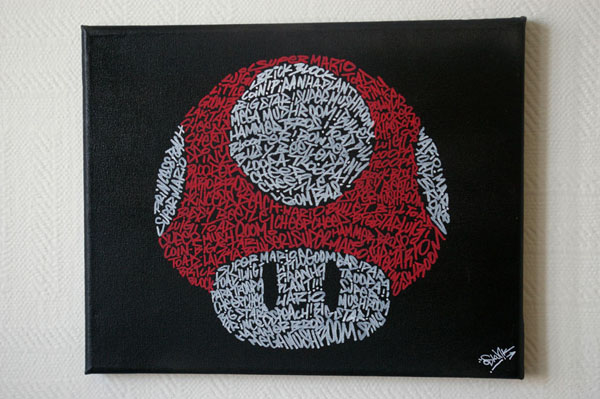 (“art”)
Debate on the topic is so tired to me that I’ve had this post saved as a draft since I started this blog. Being an avid fan of video games and coming from a liberal arts college, entering the fray of an un-winnable debate seemed like a natural move. But a post on video games as art was already feeling a year late, months ago. Why now then? My inspiration will be revealed shortly, after a very brief somewhat long just frickin stick with me okay? aside:
Art is an ideal. Nobody has the example form of “art” locked away somewhere, for us to look at and compare new creations to as a manner of deciding if they are up to snuff. Like any good liberal arts student, I’m well aware of the history of ideals in our society, and could bore plenty of people with musings about the development of ideals in society from Plato to Kant to Nietzsche. Woo hoo. The only thing that matters about ideals is that we never have a mutual, universal understanding of what they describe. Just like good in one culture is different from good in another, art in one culture is different from art in another. In an internet world where the majority of our personal exposure to culture is self-selected from an almost limitless number of sources, agreement on what is contained within a notion like “good” or “art” has fragmented even further – the websites I read tell me one thing, and the websites my roommate reads tell him another. Our inability to come to a consensus on video games as art is as unsurprising as our inability to come to a consensus on any other intangible concept, like justice or religion.
But I venture that art does have one quality which most would agree upon – art needs to be able to push boundaries. There’s an innate concept of progression in the endeavors we generally consider art, as opposed to the things we don’t, like, say, filing taxes. When people ascribe the qualities of art to typically non-art things, they are describing the sense they get when they feel a progression in the practice of that thing – when an accountant claims that there is indeed an art to filing taxes, she is describing the sense of progression that comes from doing an activity in repetition. While video games obviously have a similar learning/mastery feel, that isn’t the type of progression I feel all art shares.
This year’s E3, the perennial festival of game announcements for the coming year, was the inspiration for this post. I’m excited to play a bunch of different games, but here’s the meat of the list: Assassin’s Creed 3, Mass Effect 3, Halo 1 remake (but really, it’s the 6th Halo game – 1, 2, 3, ODST, Reach… and 1 again), Uncharted 3, Call of Duty number 70, Diablo 3… and Journey. You don’t have to know anything about video games to realize that only one of those titles has the potential to be a wholly unique experience (and thank god for Journey, or else this article would need a different conclusion). You can argue that the sequels are art in the manner that tax filing can be art, in progression through small improvements achieved through repetition. But Halo and Call of Duty are basically simple first person shooters, of which there have been literally thousands before. They will be quality entertainment, but it’s a stretch to say that they are pushing boundaries in an artistic sense.
Pushing boundaries, and thus art, requires that completely new takes on the medium show up. Van Gogh, Escher, Picasso were all great artists for their newness, as compared to pre-Renaissance greats. Those pre-Renaissance greats, the ones who painted still lifes and landscapes over and over, were artists indeed, but painting as an art form required the Van Goghs and the Eschers to lend the medium promise of originality in a sense that transcends perfection through repetition. Pre-Renaissance artists were definitely the seasoned tax specialists of my double-analogy. (Painting has always intrigued me as an art form historically, because being a living painter was a rather bleak experience in the pre-Renaissance period as compared to the fabulous lives lead by, say, Andy Warhol or Banksy, AFTER human culture agreed that painting was a true art.)
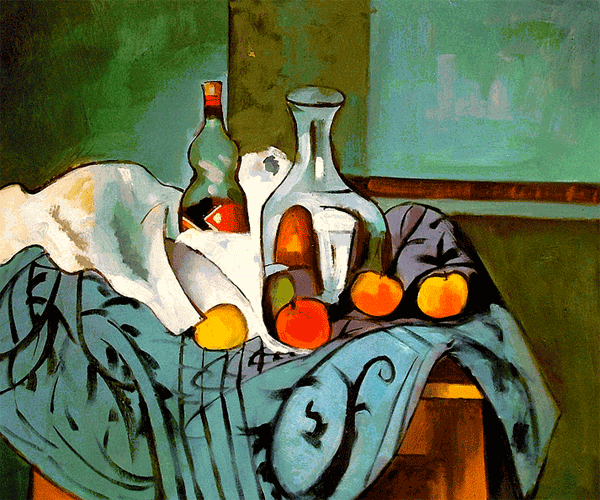 (Still life by Cezanne, a boundary pusher)
Video games are young, and my point in all this is that the medium hasn’t left the pre-Renaissance phase. I’m more excited about the games coming out of E3 than I have been in years, but Assassin’s Creed 3 is the third rendition of a decent still life. Halo is the 800th rendition of the still life called Doom. Developers are, largely, still painting still life. A large part is tied to expense: The profit motive that funds these games is, to really push this metaphor, like the patronage system that drove pre-Renaissance art. It still costs a LOT of money to make and market a big video game, so 90% of the stuff we hear about is driven by the aims of the companies bankrolling the ventures. Games are increasingly built to fit the agreements that make the developers money, by establishing a brand, and making the majority of the profits on the cheaper-to-develop sequels. This cycle works, and because games are such expensive investments, developers stick to it.
So that’s basically my take on the whole thing… Economics have driven games to the point of being somewhat repetitive and derivative, and while there are certainly unique, original entries that push boundaries (Limbo and Heavy Rain last year, Journey this year), they are few and far between in a sea of first person shooter rehashes, and they don’t make nearly as much money, so developers don’t clamor for them. There’s art out there, but until the cost of distribution, marketing and development come down dramatically, studios will still favor the still life to the Picasso.
 danielmarkmiller.net
I guess i’d agree that art forms need to be able to push boundaries, when defining the actual mediums – that is, if a medium isn’t able to push boundaries, then that medium can’t be considered art. But I assume things that aren’t really art can push boundaries too, perhaps even taxes if you want to reuse that example… so i’m not sure that definition is the best one.
I’m still more interested in the analog approach, probably the more mathematical and less wordsmithy approach. Whatever definition you’re using, I’d argue that movies are almost universally considered an art form (i imagine Ebert would agree with that at least). So movies as a medium are art, and while there are some very low quality, and not very artistic, movies made just for the money and not in the name of art, that doesn’t change the medium’s status as art. I’d argue similarly that as long as there is one video game that is art, the medium is an art form. From there it’s probably not too hard to find a game to consider art – http://www.google.com/url?sa=t&source=web&cd=3&ved=0CCsQtwIwAg&url=http%3A%2F%2Fwww.youtube.com%2Fwatch%3Fv%3DnJam5Auwj1E&rct=j&q=play%20game%20flower%20in%20wind&ei=OUz-TZHNHszSiAKm6-zzBw&usg=AFQjCNEWLmvsfGIIbyVfB1HS3lz0MU0Tag&sig2=EYS3sOJ2OHyhNV2y9sGFoA&cad=rja is the one i’d differ to. Games, like movies, are an experience that portray some story to the consumer – the only real difference is that video games are interactive. What if you made some movie with choices you could make along the way? No doubt it’d still be considered a movie, but you would be making meaningful choices (look at deifnitoin of game) and would be altering the story/ending along the way. We could even give you a score for getting the best ending… video games seem to me to just be an extension of that where every second you are making the choice of what direciton to take the story, or just completing a part of it the way you wnat before continuing down the storyline already put out there by the author/producer/designer. Anyway. that’s all.
Yeah, if you really look at Ebert’s argument, he doesn’t understand that modern games aren’t all about “beating” them or getting a high score. Metal Gear Solid 4, Portal, Heavy Rain, etc are all games where you just help a story unfold. I think Ebert would have to agree with your analog/movie thing and admit that games were art too if he played any of the games where a high score is a secondary or even impossible (Limbo) objective.